If your skin flares at the wrong cleanser, you know the pattern already. Redness, tightness, the itch that turns up hours later. Walking away from a product without rinsing can feel like asking for trouble. It doesn't have to be.
TL;DR Quick Answers
Waterless soap
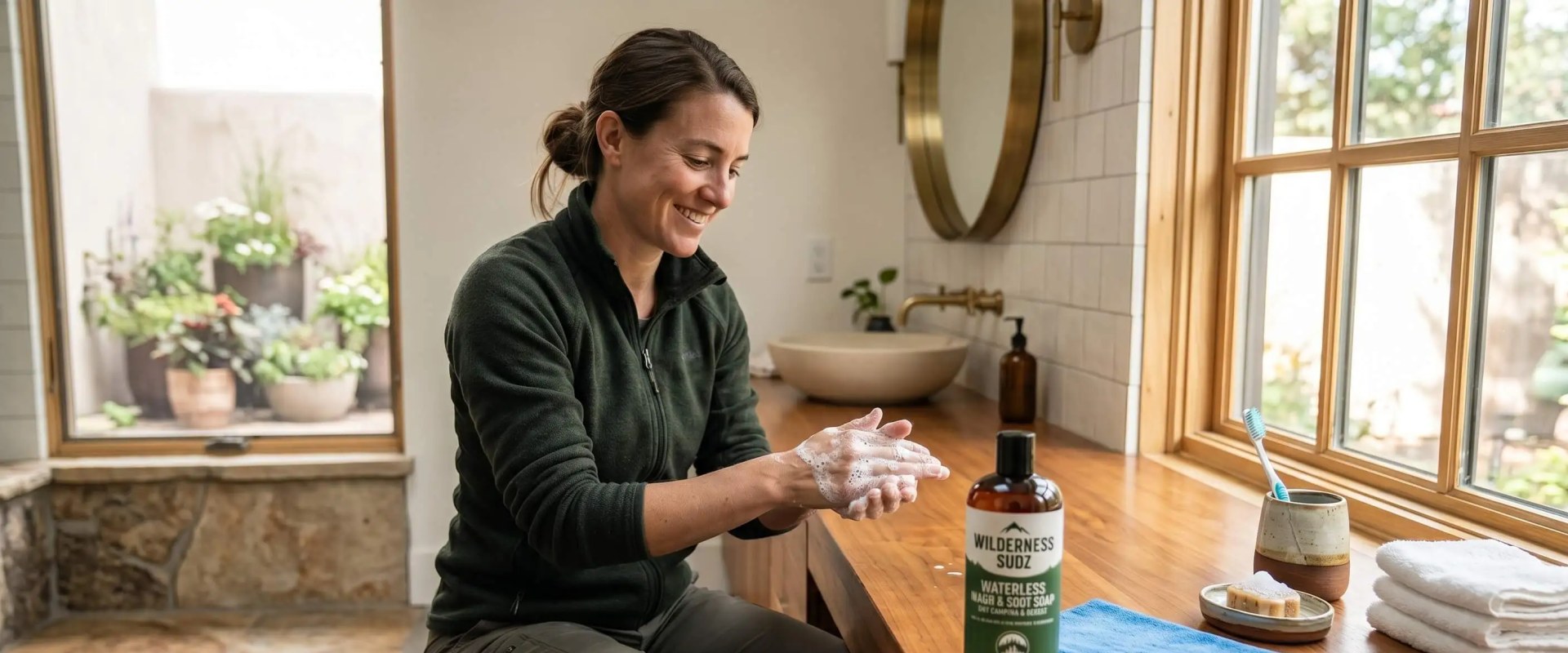
Waterless soap is a rinse-free cleanser that gets your hands clean without a tap. You put a drop on dry skin, rub, and the formula lifts away dirt, oil, and germs so you can absorb, wipe, or brush them off, with no water needed.
It isn't hand sanitizer. Sanitizer kills some germs with alcohol and leaves the residue on your skin. Waterless soap physically removes dirt and germs and takes them with it.
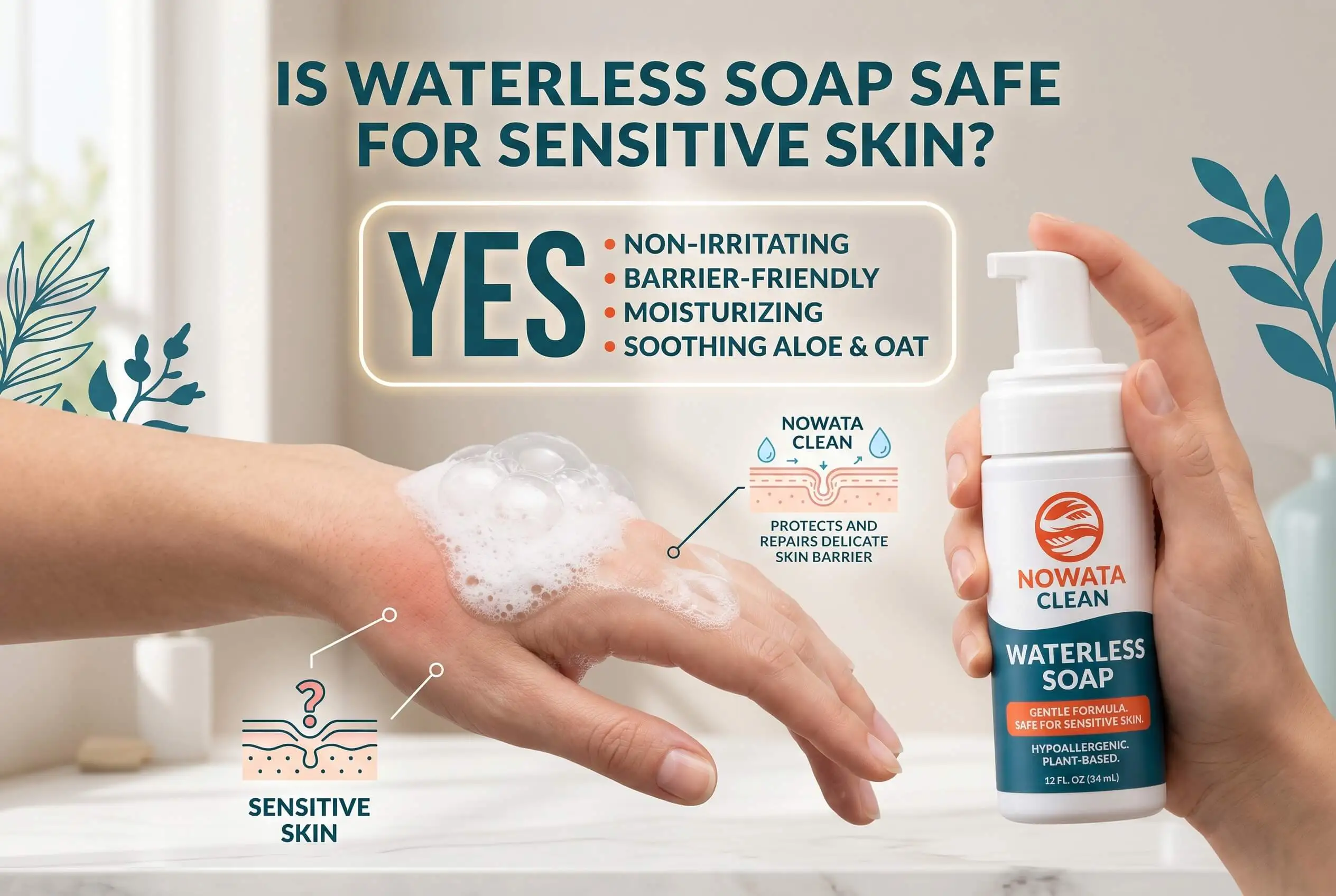
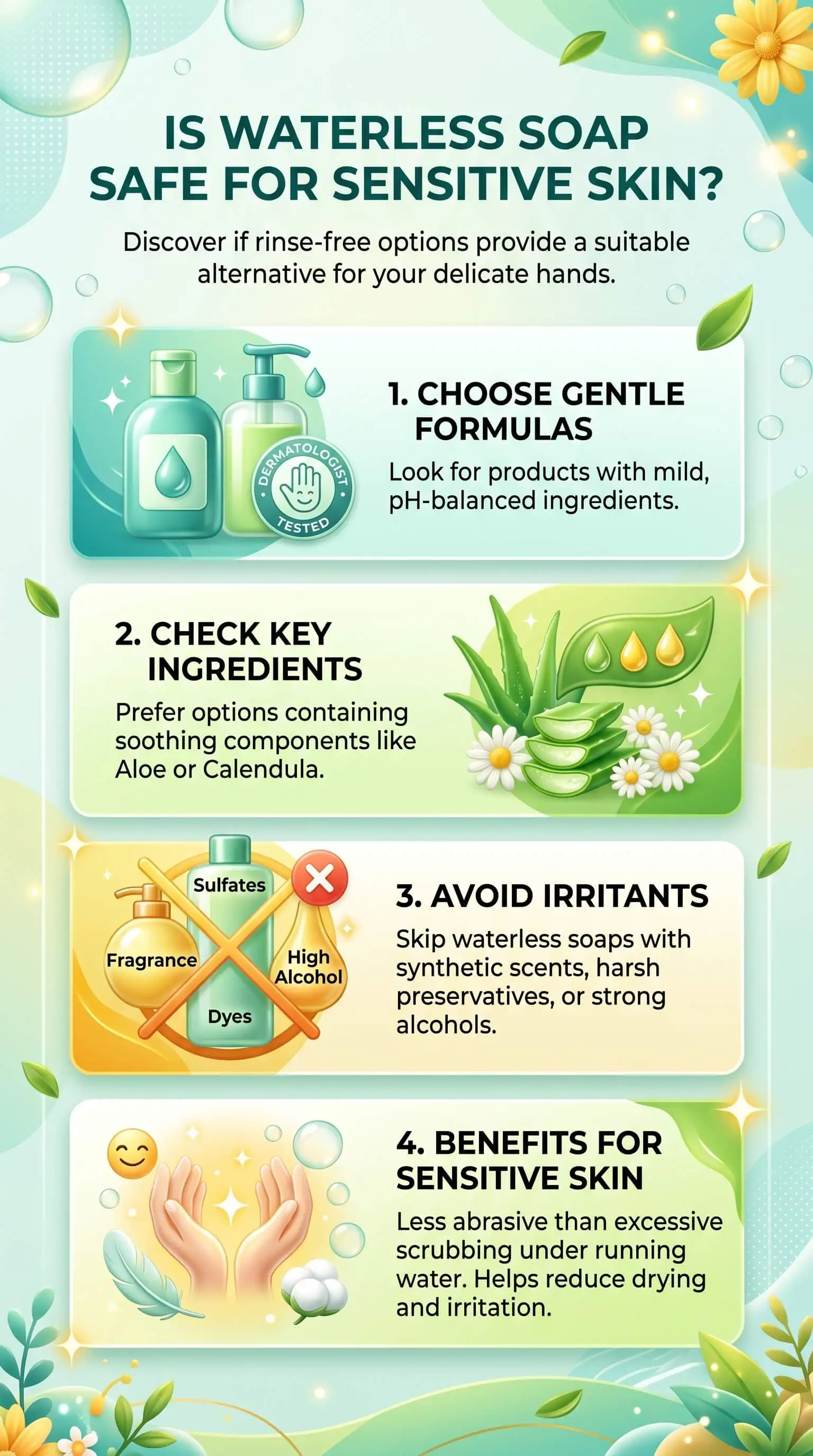
It can be gentle on sensitive skin. Choose fragrance-free, alcohol-free, plant-based formulas, and spot test before regular use.
It's built for the go. Travel, camping, commutes, festivals, and sticky kid hands, anywhere clean water runs short.
It's easier on the planet. A rinse-free wash can save up to two gallons of water each time, and many formulas are biodegradable.
Top Takeaways
Waterless soap can be safe for sensitive skin. The formula decides that, not the missing water.
Skip sulfates, synthetic fragrance, parabens, drying alcohols, and synthetic dyes.
Look for glycerin, aloe, and hyaluronic acid on a short, fragrance-free, alcohol-free label.
It isn't hand sanitizer. It lifts dirt and germs away without alcohol. Sanitizer kills them with alcohol and leaves the residue behind.
Spot test anything new, and see a dermatologist for eczema, psoriasis, or repeat reactions.
What Waterless Soap Actually Is
Waterless soap, sometimes called rinse-free or no-rinse soap, cleans without a tap. It runs on the same chemistry as the soap by your sink, where cleansing molecules latch onto oil and grime and lift them off your skin. The only thing that changes is the format. Instead of rinsing everything away, you rub the product in and then let it absorb, wipe it off, or brush it away. With some plant-based formulas, the dirt and oil actually clump up so you can brush the little bits right off your hands.
You'll find it as foaming liquids, towel-off cleansers, sulfate-free hand soap, plant-based formulas you brush off, dissolvable tablets, even dry shampoo. They all do one job: get your hands and skin clean when water isn't handy.
Here's the part that matters for sensitive skin. Waterless soap and hand sanitizer aren't the same thing, and NOWATA makes that case better than anyone. The CDC points out that sanitizer kills germs with alcohol and leaves the residue on your skin, while soap lifts dirt and germs off and takes them with it. That alcohol is also why sanitizer can leave reactive skin dry and stinging. Plenty of waterless soaps skip alcohol completely, so the two don't swap in for each other.
Why Sensitive Skin Reacts to Some Cleansers
Your skin barrier holds moisture in and keeps irritants out. Strip it with a harsh ingredient and the skin underneath turns reactive, which is how contact dermatitis starts. Cleveland Clinic notes that the irritant type is the more common one, often set off by everyday products like soaps and detergents, and the rash can take hours or even a couple of days to show up.
Once that clicks, choosing gets easier. A reaction rarely has anything to do with whether you used water. Some specific ingredient is the culprit, which is why reading the label pays off.
Ingredients to Avoid
Run sensitive skin? These are the usual suspects. Scan the label and steer clear of:
Sulfates (SLS and SLES). Strong foaming agents that strip your skin's natural oils and weaken the barrier.
Synthetic fragrance or parfum. One of the most common triggers for reactions, and that single label word can hide dozens of compounds.
Parabens. Preservatives that bother reactive skin in some people.
Drying alcohols. Listed as denatured or SD alcohol, they sting and dry out sensitive skin.
Synthetic dyes and colorants. Added for looks, not for your skin.
Cocamide DEA and balsam of Peru. Two less obvious extras that land on dermatology lists of frequent soap allergens.
Ingredients to Look For
Now the better news. A gentle waterless soap usually leans on a short, readable list. Green flags:
Humectants and soothers like glycerin, aloe vera, chamomile, and hyaluronic acid, which hydrate while they clean.
Skin-friendly plant ingredients such as coconut-derived cleansers, kaolin clay, and plant oils that support the barrier instead of stripping it.
Honest label signals: fragrance-free, sulfate-free, alcohol-free, pH-balanced, plant-based, and an ingredient list short enough to actually read.
Two cautions. Fragrance-free and unscented don't mean the same thing, since unscented can still carry a masking fragrance. And even a clean label earns a spot test, because no formula works for every person. Trust marks help too, like the National Eczema Association Seal of Acceptance or a low-hazard score in EWG Skin Deep.
How to Choose One Without the Guesswork
You don't need a chemistry degree to pick a safe one. Work through this:
Read the full ingredient list and check it against the avoid list above.
Choose fragrance-free and alcohol-free first. Those two swaps head off most sensitive-skin reactions.
Spot test before full use. Dab a little on your inner wrist and give it 24 to 48 hours before trusting it on your hands or face. If anything feels off, stop using it.
Look for a recognized seal, like the National Eczema Association mark, as a fast credibility filter.
Check with a dermatologist if you have eczema, psoriasis, or reactions that keep coming back.
When Waterless Soap Makes the Most Sense
Waterless soap earns its spot when a sink is nowhere in sight. Road trips, hiking and camping, packed commutes, festivals, sticky hands at the playground, anywhere clean water runs short. It's also a real help if you have limited mobility or you're healing from a procedure and getting to a faucet isn't simple. Skipping the rinse saves water, too, and many formulas break down cleanly in the environment.
If you want a sensitive-skin-friendly place to start, try NOWATA, a plant-based, alcohol-free waterless soap made by two doctors who are also parents. It skips alcohol, added fragrance, and parabens, so it won't sting or dry reactive skin, and it physically lifts dirt and germs off your hands so they clump up and brush away, with no water needed. It's gentle enough for a toddler's snack-sticky hands and tough enough for trail dirt, it's biodegradable, and it saves up to two gallons of water each time you use it instead of the tap. Treat it like any new product. Do a quick wrist test first and read the ingredients so you know what's going on your skin.
“The question I hear most is whether skipping water makes a cleanser harsher. It doesn't. In my practice, the reactions I trace back to hand products almost always come from fragrance or a stripping surfactant, not the rinse-free format. I tell patients to read past the front of the label, pick fragrance-free over unscented, and spot test on the inner wrist for two days before trusting”
7 Essential Resources
Want to go deeper or check a claim yourself? These authoritative sources are worth a bookmark:
American Academy of Dermatology: Skin care tips dermatologists use. Expert-backed guidance for everyday skin care, sensitive types included.
U.S. FDA: Cosmetics. The agency's hub on allergens and fragrances in personal care products and how they get labeled.
CDC: About Handwashing. The science of clean hands, and why soap removes germs while sanitizer kills them.
National Eczema Association: Seal of Acceptance. A vetted directory of products judged suitable for eczema-prone and sensitive skin.
EWG Skin Deep Cosmetics Database. Search a product or ingredient and see its hazard rating before you buy.
Cleveland Clinic: Contact Dermatitis. A clear medical overview of what makes skin react and how to prevent it.
Medical News Today: Harmful chemicals in soap. A plain-language breakdown of soap ingredients that can irritate sensitive skin.
3 Statistics Worth Knowing
Sensitive skin is the norm, not the exception. A review of survey data found that roughly 70 percent of adults report some degree of sensitive skin, which is why gentle formulas matter to so many of us (Frontiers in Medicine, via NCBI).
Water adds up fast. A standard U.S. bathroom faucet flows at about 2.2 gallons per minute, so every rinse-free wash is water you simply don't use, whether you’re saving resources at camp or thinking about water-conscious home updates like top flooring trends. (U.S. EPA WaterSense).
Fragrance is a leading culprit. Fragrance allergy affects an estimated 0.7 to 2.6 percent of the general population and ranks among the most common causes of allergic contact dermatitis, which is why fragrance-free is the safer default (StatPearls, via PubMed).
Final Thoughts
Here's my honest take. The fear that waterless soap is rougher on sensitive skin is mostly a misread. The format isn't the problem. A badly chosen formula is, and that's just as true of the bottle by your sink. Pick one that's fragrance-free, alcohol-free, and light on harsh extras, spot test it, and it has no reason to treat your skin any worse than regular soap. A lot of today's gentle plant-based options are actually kinder than the foaming drugstore soaps many of us grew up scrubbing with.
Frequently Asked Questions
Is waterless soap bad for your skin?
Not on its own. A waterless soap with a gentle, fragrance-free, alcohol-free formula is unlikely to hurt your skin. The trouble comes from specific harsh ingredients, the same ones that cause problems in regular soap.
Can you use waterless soap if you have eczema?
Often yes, if you choose carefully. Go for fragrance-free formulas, ideally with a recognized seal, spot test before regular use, and check with your dermatologist if your eczema is active or severe.
Is waterless soap the same as hand sanitizer?
No. Sanitizer uses alcohol to kill germs and can dry sensitive skin. Many waterless soaps lift and remove dirt and germs without any alcohol, which makes them gentler on reactive skin.
Does waterless soap actually clean your hands?
Yes. It works on the same lift-and-remove principle as traditional soap. You rub it in and then absorb, wipe, or brush it away instead of rinsing with water.
Is waterless soap safe for kids?
Many gentle, fragrance-free, alcohol-free options suit children's messy hands on the go. Same rules as adults: read the label, spot test, and ask your pediatrician if your child's skin is very reactive.
Ready to Clean Up Without the Irritation?
If your skin reacts to everything and you've been holding off, start gentle. Give a plant-based, alcohol-free waterless soap a try, run your wrist test, and keep clean hands wherever the day takes you, no sink required.