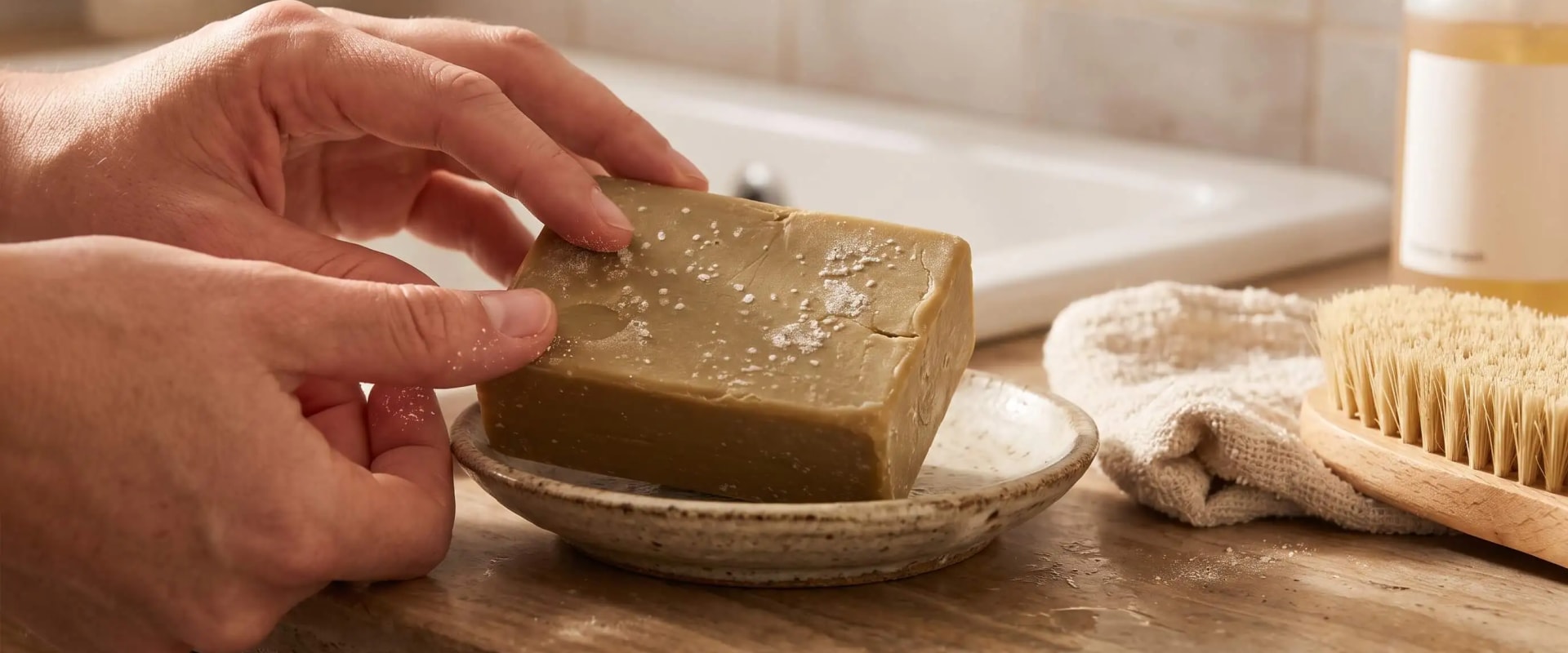
That rinse is the first thing we'd try with any spotted bar, from the guest bathroom to a soap tin in the camping bin.
Keep an eye out for one exception. Fresh handmade soap with hard, glassy white bits that sting your skin may still hold lye the maker never fully mixed in, so set it aside and let them know.
TL;DR Quick Answers
Dry soap
Dry soap is rinse-free soap you use on dry hands with no water or towel. People also use the term for a regular bar that dried out between uses.
How it works: Rub a dime-sized drop onto dry hands until it clumps, then brush the little dirt balls away.
What's in it: Plant-based formulas like NOWATA use coconut milk powder, kaolin clay and tapioca starch, and skip alcohol entirely.
How well it cleans: In lab testing, NOWATA physically removed over 99.9% of E. coli and a human norovirus surrogate from skin. It's for hand cleansing only.
Why it beats a wet bar: It never sits in a soap dish, so it never builds up scum or white spots.
Water saved: Up to two gallons each time you use it instead of the tap.
Best for: Trail grime on a hike and toddler snack hands when the nearest sink is out of reach.
Top Takeaways
Most white spots on a dry soap bar come from soda ash, hard-water residue or fat crystals, and all of them are harmless.
Ten seconds under warm water tells you whether a spot sits on the surface.
Stearic specks and additive flecks run through the bar and won't scrub off, but you can keep using it.
Hard, glassy spots that sting in fresh handmade soap may be lye, so stop using that bar.
What a Bar of Soap Is Made Of
Soapmakers start with fats and oils, then add lye. The reaction between them, called saponification, turns those ingredients into soap and glycerin, which is how soap is made at its simplest. Most makers leave the glycerin in because it softens the bar and pulls moisture from the air. Many also add a little extra oil, a step called superfatting, so no free lye stays behind.
That means a bar never dries out completely. It holds onto water and glycerin along with whatever your tap leaves on it. As the water evaporates, the leftovers usually turn white.
The 6 Most Common Causes of White Spots on a Dry Soap Bar
Soda Ash: The Chalky White Bloom
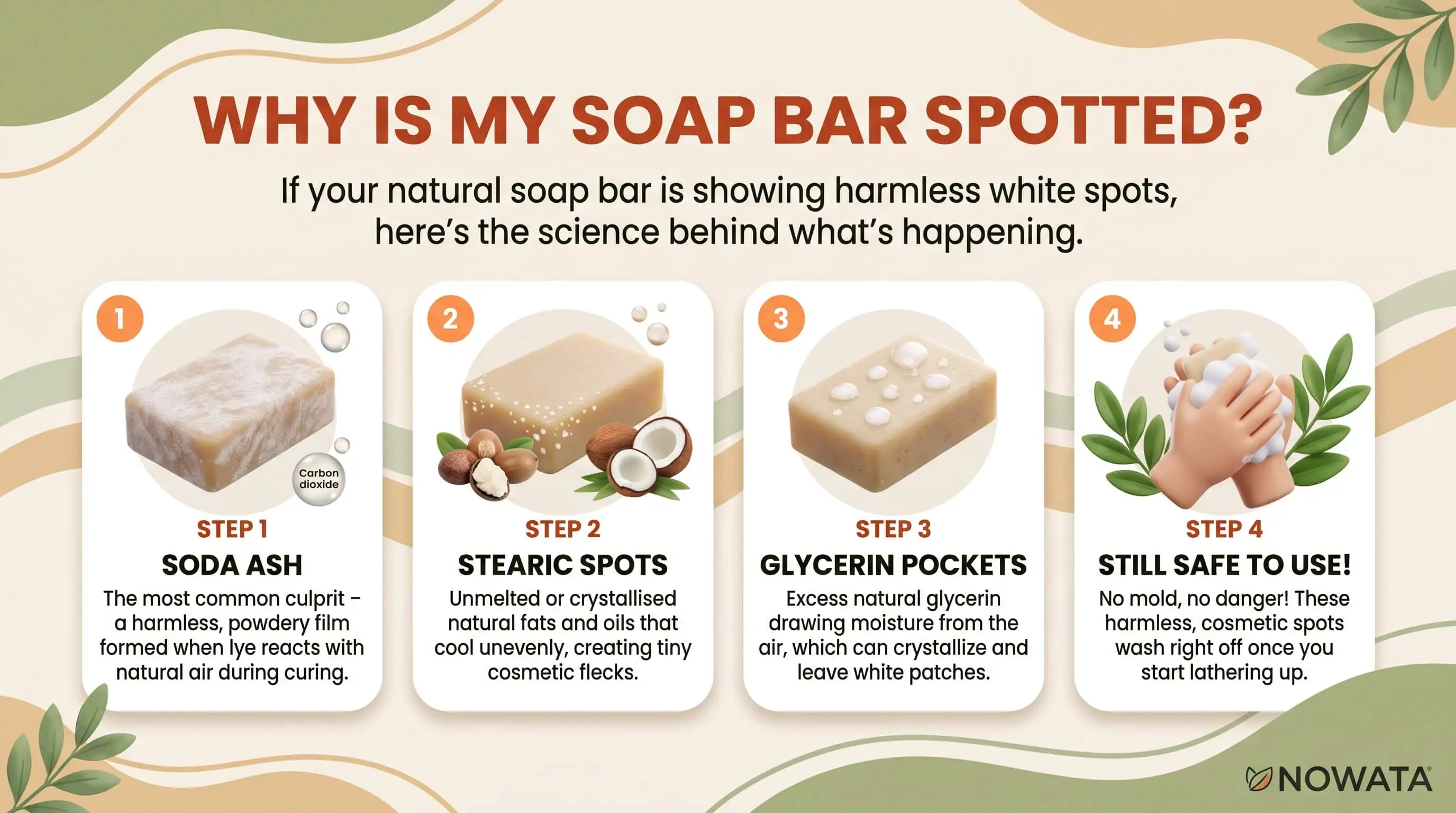
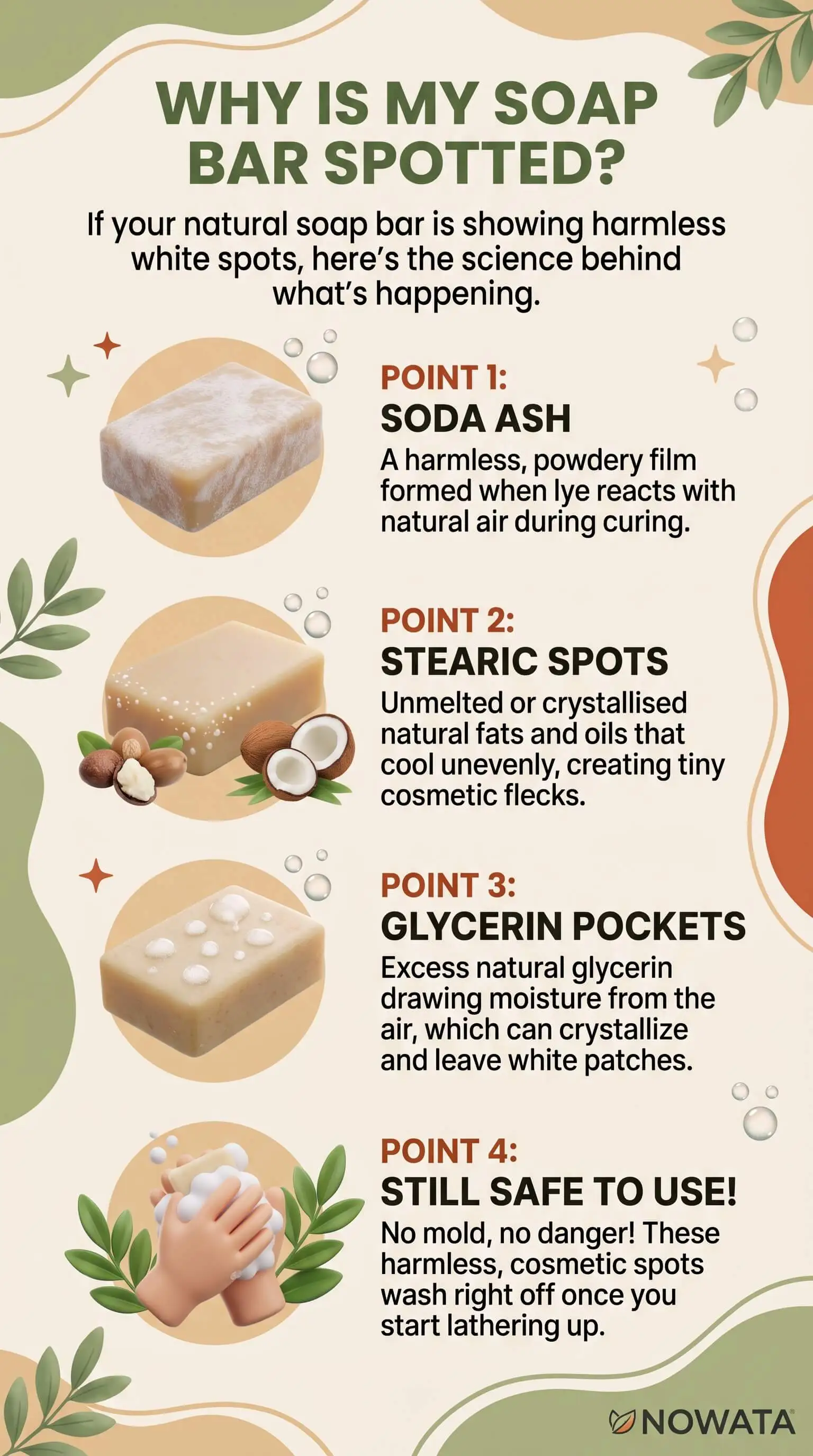
Soda ash is sodium carbonate. It forms when a trace of unreacted lye on the surface meets carbon dioxide in the air, and it looks a lot like powdered sugar. Handmade bars get it most. It never goes deeper than the surface, and it rinses or wipes off easily.
Hard Water Residue and Soap Scum
Hard tap water carries calcium and magnesium. Those minerals react with soap and leave a white film that barely dissolves in water. Check the side of the bar that rested in the dish, because that dull crust is the same film clouding your shower tile. If you scrub that tile every weekend, take a look at bathroom floors that shrug off soap scum. On the bar, one wipe clears it.
Stearic Spots: White Specks Inside the Bar
Tiny white flecks scattered all the way through a bar are usually stearic or palmitic spots. Palmitic acid melts at 145.2°F and stearic acid at 156.7°F. When a soapmaker mixes a batch on the cool side, those fats harden early and lock in place as specks. They change the look of the bar and nothing more.
Glycerin Sweat and Uneven Drying
Glycerin-rich bars soak up moisture from a steamy bathroom and bead up. When those droplets dry, they leave a cloudy haze or faint streaks behind. Soapmakers sometimes call these patterns "glycerin rivers," though they're really just soap that sets unevenly. You can keep using the bar.
Air Bubbles and Additive Specks
Mixing can trap tiny pockets of air that show up as white pinpricks after someone cuts the bar. Titanium dioxide, clay, salt and milk solids leave white flecks too. Neither one causes any harm.
Lye Spots: The One to Take Seriously
If a maker doesn't mix a handmade batch all the way, undissolved lye can surface as hard, crystal-like white spots or small pockets of liquid. Those spots can irritate or even burn skin. Curing the bar longer won't fix them, so stop using it and tell the maker. You'll rarely find this in store-bought soap because manufacturers superfat their bars to leave no free lye.
How to Tell Which White Spots You Have
Check three things: where the spot sits, how it feels and what warm water does to it. Most of the time you'll have your answer in under a minute.
Soda ash: Powdery and chalky on the top and outer surfaces, appearing days to weeks after the soap was made. It rinses off, and the bar is safe.
Hard water residue: A dull, crusty film on the side that sat in the dish, building up with use. A good rub wipes it away, and the bar is safe.
Stearic spots: Small, firm flecks throughout the bar from the first day. Water won't move them, and they're safe.
Glycerin sweat: Cloudy haze or streaks on the surface, mostly in humid rooms. It fades as you use the bar.
Air bubbles or additives: Pinpricks or specks on cut faces and inside the bar. They stay put and don't need to go anywhere.
Lye spots: Hard, glassy crystals or wet pockets in a fresh handmade bar that sting or burn skin. Don't use it.
Is Soap With White Spots Safe to Use?
Yes, in five cases out of six. Soda ash, mineral residue, stearic spots, glycerin haze and air bubbles only change how a bar looks. Lye spots are the one reason to stop.
Worried about germs on a used bar? Science backs you up. In a 1988 study published in Epidemiology and Infection, researchers coated bars with E. coli and Pseudomonas at about 70 times the amount found on everyday used soap. Sixteen volunteers washed with them, and none ended up with detectable test bacteria on their hands.
Bars do pick up microbes, though. A 2006 team writing in the Indian Journal of Dental Research tested in-use bar soap at 18 dental clinics and found growth on every sample, with the busiest bars carrying the most. A dish that drains keeps that in check.
Replace the bar if you notice any of these:
Stinging, burning or red skin after you use it
Liquid oozing from pockets inside
Hard, glassy white crystals in a fresh handmade bar
Fuzzy, raised growth
A sour or rancid smell
Orange spots on older handmade soap send a separate signal. They mean the oils are going rancid. That has nothing to do with white spots, but it's still your cue to open a fresh bar.
How to Remove White Spots From a Bar of Soap
Run the bar under warm water for a few seconds.
Rub the spots with your fingers or a damp washcloth until the surface feels smooth.
If a thick layer of ash hangs on, shave off a paper-thin slice with a vegetable peeler.
Let the bar dry on a draining dish before you use it again.
Stearic specks and air-bubble dots run all the way through, so scrubbing won't touch them. They're harmless. Keep lathering.
How to Keep Your Bar Soap From Spotting
Airflow does most of the work for you. These habits help most:
Use a slotted or draining soap dish so the bar never sits in a puddle.
Keep it out of the direct shower spray.
Cut big bars in half and rotate the pieces so each one dries out completely.
Give the bar a quick rinse and pat after each use if you have hard water.
Store spare bars wrapped, somewhere cool and dry.
Let handmade soap finish curing before you start using it.
Handmade vs Store-Bought Bars: Which Spot More?
Handmade soap shows soda ash and stearic spots more often, mostly because makers mix and cure small batches by hand. Many store-bought "beauty bars" are synthetic detergent bars rather than true soap, and they tend to leave less scum behind in hard water. Want to know which kind is in your shower? Reading a soap label takes about 30 seconds.
What People Mean by Dry Soap
People also use "dry soap" for something besides a bar that dried out. It's the name for soap you use on dry hands with no water at all, and NOWATA makes a plant-based dry soap built exactly that way. It never sits in a wet dish, which means you skip the soggy bar and the white crust along with it.
Dr. Ruslan and Dr. Yalda, two doctors who are also parents, created it for their own family. It works nothing like the bar at your sink. Squeeze a dime-sized drop onto dry hands, rub until it clumps, then brush the little dirt balls away. The formula is 100% plant-based and alcohol-free, with ingredients like coconut milk powder, kaolin clay and tapioca starch.
In lab testing, NOWATA physically removed over 99.9% of E. coli and a human norovirus surrogate from skin. NOWATA notes that it's for hand cleansing only and that those results don't mean it prevents disease.
Every time you reach for it instead of the tap, you save up to two gallons of water. It's safe enough for toddler snack hands and tough enough for trail grime. If your skin reacts easily, here's why waterless soap is safe for sensitive skin when you choose the formula carefully.
"People bring me spotted soap more often than you'd guess, and I can usually settle their nerves in about ten seconds. I run the bar under warm water and rub it with my thumb. Soda ash and hard-water film come right off, and that covers most cases. The bar I'd pull is a fresh handmade one with hard, glassy spots that sting. Everything else is soap that dries unevenly, and a draining dish fixes most of it."
7 Essential Resources
Check our work or keep reading with these:
Wikipedia: Soap explains how soap gets made, why glycerin stays in the bar and what superfatting does.
Lovin Soap: White Spots in Soap walks through photos of stearic spots, wire-cutter bubble marks and lye spots side by side.
Making Soap Naturally: Lye Spots on Soap shows what lye spots and pockets look like and why those bars belong nowhere near your skin.
Epidemiology and Infection: Washing With Contaminated Bar Soap Is Unlikely to Transfer Bacteria is the 1988 study behind our answer on used bars.
Indian Journal of Dental Research: Microbial Contamination of In-Use Bar Soap makes a strong case for drying your bar between washes.
BBC Science Focus: Why Does Soap Leave a Film Even After Rinsing? breaks down how hard water turns soap into scum.
CDC: Handwashing covers when to wash, how long to scrub and why clean hands matter.
3 Statistics
Used bars are cleaner than they look. Heinze and Yackovich loaded soap with bacteria at about 70 times the level on typical used bars, and none of the 16 people who washed with it came away with detectable test bacteria on their hands, according to their 1988 study in Epidemiology and Infection.
Wet bars still collect microbes. Hegde and colleagues sampled in-use bar soap at 18 dental clinics and found microorganisms in all 32 samples, with heavier use bringing more growth, as they reported in the Indian Journal of Dental Research in 2006. Drying the bar between uses is the simple answer.
Some oils come with spots built in. Palm oil runs about 44% palmitic acid, according to Wikipedia's fatty acid table for soap fats, and Lovin Soap puts that acid's melting point at 145.2°F. A palm-heavy batch mixed too cool locks those fats in as white specks.
Final Thoughts
Our take is simple. A spotted bar looks like trouble, but nearly every time it's just water leaving while minerals or fats stay behind. Before you toss it, give it a rinse and a better dish.
Fresh handmade soap with hard, glassy spots deserves real caution, and your skin will usually tell you fast. If you're done babysitting a wet bar, especially on the road or with little ones, try a dry soap that works without water. It never sits in a puddle, so it never crusts over.
Frequently Asked Questions
What are the white spots on my dry soap bar?
Most are soda ash, dried hard-water minerals or crystals of high-melt fats. Soda ash forms when leftover lye on the surface reacts with carbon dioxide in the air. Mineral residue appears when calcium and magnesium in tap water react with soap. Neither one changes how the soap cleans.
Is it safe to use soap with white spots?
In nearly every case, yes. Soda ash, soap scum, stearic spots, glycerin haze and air bubbles are all cosmetic. Fresh handmade soap with hard, glassy spots that sting your skin is the exception, since those spots can point to undissolved lye. Set that bar aside.
Can you wash soda ash off soap?
Yes. Hold the bar under warm water and rub it with your fingers or a damp cloth until the surface feels smooth. For a thick layer, shave off a thin slice with a vegetable peeler. Then let the bar dry on a draining dish.
Can a bar of soap get moldy?
It doesn't happen often, but a bar left in standing water can turn slimy, and researchers have found microbes on in-use bars. Fuzzy, raised growth or a sour smell means it's time to throw it out. Keeping the bar dry between uses heads off most of this.
How do I know if my handmade soap has lye spots?
Lye spots look like hard, glassy white crystals or small pockets of liquid, and they usually appear soon after the maker finishes the batch. They can sting, redden or burn skin. Extra curing won't help, so stop using the bar and contact the maker.
What is dry soap?
Dry soap has two meanings. It can describe a bar that dried out between uses. It's also the name for rinse-free soap you use on dry hands to lift dirt away without water, and since that kind never sits in a wet dish, it doesn't get white spots.
Ready for Soap That Never Sits in a Puddle?
Rinse your bar and give it a dish that drains, and those white spots should stop coming back. Next time you pack for a hike or an afternoon at the park, bring a waterless no rinse hand soap for convenient hand cleaning wherever you are, sink or no sink.


