The best soap for backpacking and hiking on a long trip carries no added fragrance and needs little or no water — and it lasts from trailhead to trailhead without leaking in your pack. Scented soap works against you out here. Floral and citrus notes can draw bugs and curious wildlife, while fragrance tends to sting hands already cracked by sun and wind.
Here's our honest read: one soap won't cover every job on a multi-day route, and it doesn't have to.
TL;DR Quick Answers
Best Soap for Backpacking and Hiking
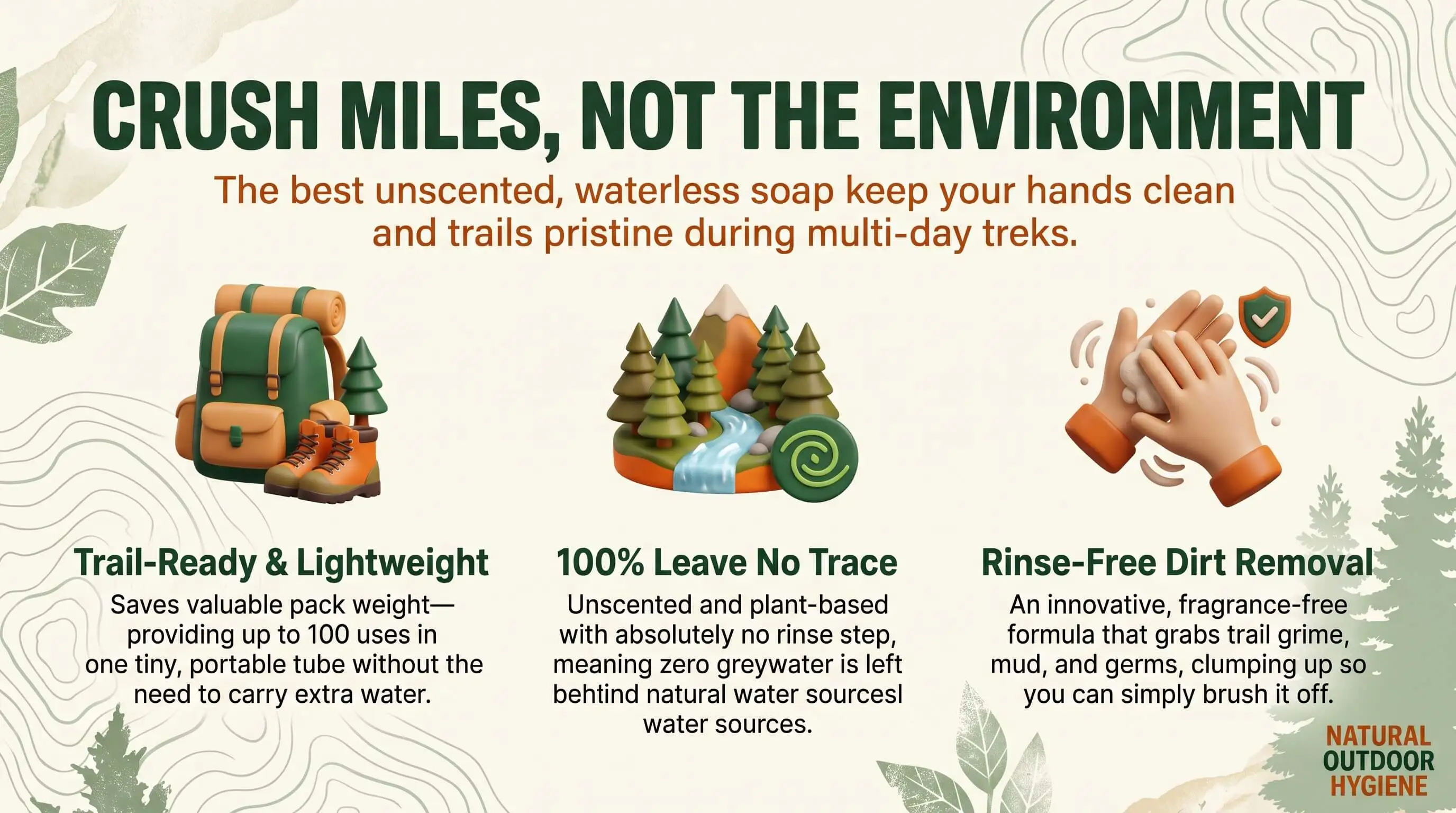
The best soap for backpacking and hiking is a fragrance-free, rinse-free soap for your hands, paired with a small bottle of unscented castile for body and dishes. Hand washing is the job you'll repeat most on the trail, and a rinse-free soap does it with no water and no greywater to pack out.
Hands: a rinse-free soap such as NOWATA™. A dime-sized drop clumps as it pulls off the grime, then brushes away.
Body and dishes: a few ounces of unscented castile, used at least 200 feet from water.
Why fragrance-free: fewer smellables in the bear canister and less sting on sun-cracked hands.
Why rinse-free: it skips the water haul, so you'll actually wash at the cat hole and before meals.
What to skip: scented soap, and the idea that "biodegradable" means you can use it in a stream.
Top Takeaways
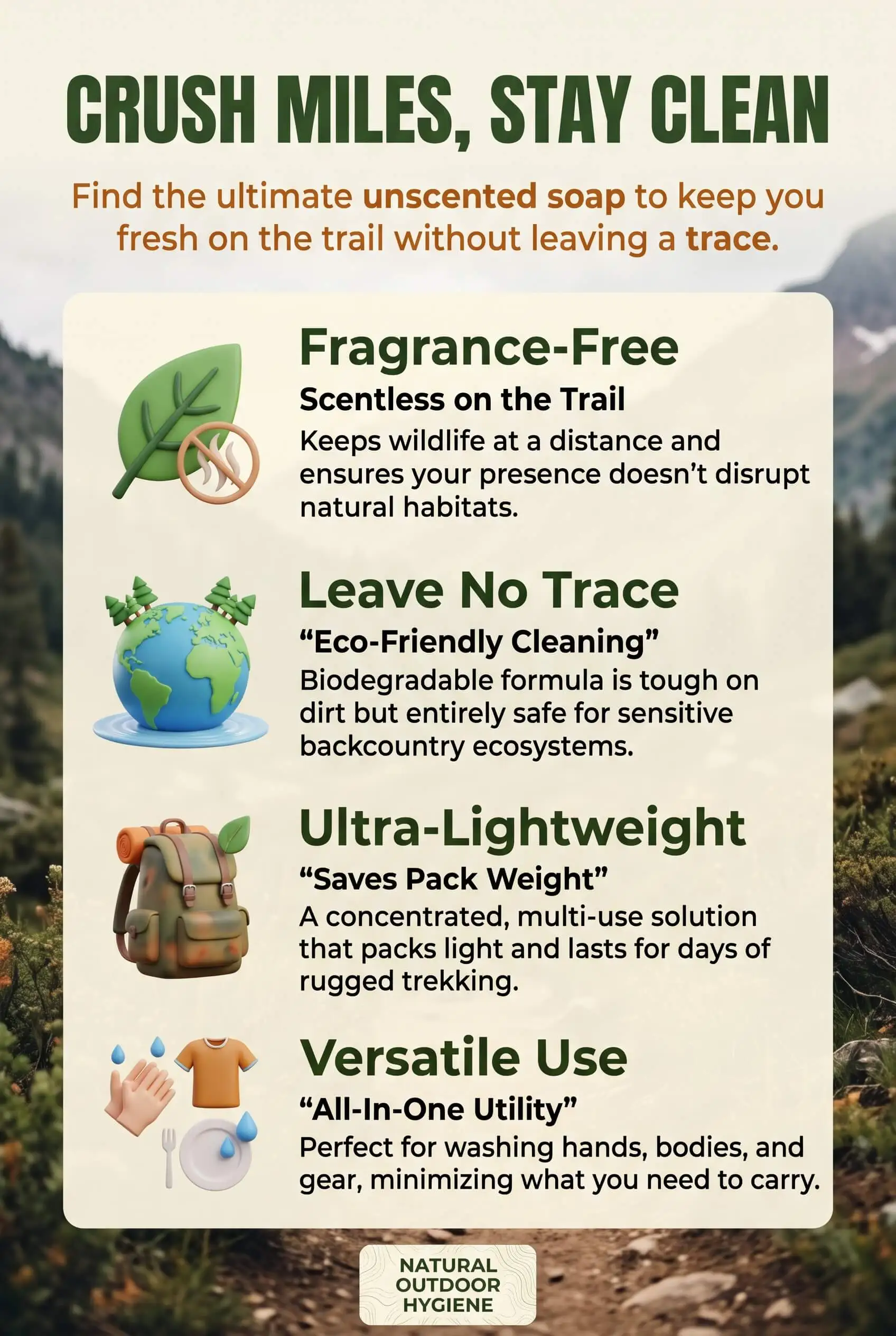
Go fragrance-free. Scented soap gives wildlife one more smellable to find and gives trail-worn hands one more irritant.
Pick soap for the job. Use rinse-free soap for hands and unscented castile for body and dishes.
Respect the 200-foot rule. Biodegradable or not, soap never gets lathered up in a lake or stream.
Store soap like food. Toiletries ride in the bear canister or locker and never sleep in your tent.
Plan for the whole route. Multiply daily washes by trip days, then pack that amount plus a small margin.
Keep it reachable. Soap in a hip-belt pocket gets used, while soap at the bottom of the pack mostly doesn't.
Why Unscented Soap Matters on a Multi-Day Trip
Scent hardly registers on a day hike. Stretch that hike across four or five nights, though, and every scented item in your kit becomes one more thing to manage.
Wildlife, Bugs and Your Bear Canister
Animals find food by smell. Sweet, floral or citrus fragrances can pull in insects and make your campsite more interesting to camp-raiding critters. Anything scented also counts as a smellable, so it rides in the bear canister or bear hang with your food every night. Unscented eco-friendly soap for camping won't make you invisible to wildlife, though it does take one reason off their list.
Skin That Takes a Beating
Sun, wind, sweat and grit wear down the skin on your hands fast. Wash those hands several times a day with a fragranced soap and you'll likely end up with cracked knuckles and cuts that sting. A gentle formula with no added fragrance is easier on hands that don't get a rest day.
Unscented vs Fragrance-Free
The labels sound interchangeable, and they aren't always. An unscented product may contain a masking agent that covers the natural smell of its ingredients, while fragrance-free means the maker added no fragrance at all. No soap is truly odorless, so read the ingredient list instead of trusting the front of the bottle.
What to Look for in the Best Soap for Backpacking and Hiking
On a long trip, every ounce and every splash of water you haul has to earn its place. Here's what we check before any soap goes in the pack:
No added fragrance: fewer smellables to store and less irritation on your hands.
Water per wash: the less a soap needs, the less you carry and the less greywater you leave behind.
Weight per use: a concentrated formula beats a big bottle.
Leak-proof packaging: soap across a sleeping bag makes for a long night.
A gentle, alcohol-free formula: your hands won't get a day off out there.
Uses per container: enough to cover the full route.
Rinse-free or biodegradable: either one makes it easier to protect the ground you camp on.
Our rule of thumb is to pick by the job first, whether that's hands, body or dishes, and then by how much water you can spare.
Our Top Pick for Hands: NOWATA™ Rinse-Free Soap
A rinse-free soap handles the two biggest headaches of trail hand washing at once, because it needs no water and leaves no greywater behind. That's why NOWATA is our pick for the best soap for backpacking and hiking when your hands need an actual wash and a squirt of sanitizer won't cut it.
How It Works on the Trail
Squeeze a dime-sized drop onto dry hands. Rub until the soap starts to clump as it pulls off the dirt and grime, then brush the clumps away. You skip the rinse entirely, so there's no soapy water to carry away from a stream.
How Long One Tube Lasts
NOWATA rates one tube at roughly 80 to 100 washes. A solo hiker washing three times a day gets about four weeks out of that, which covers most section hikes.
Why It Fits an Unscented Kit
NOWATA describes the formula as plant-based and alcohol-free, made without harsh chemicals or added fragrances. According to the brand, independent lab testing found it removes over 99.9% of germs in about 45 seconds. It lifts germs off the skin and takes them with the clumps instead of trying to kill them in place.
One heads-up: the formula includes a macadamia-derived ingredient, so patch-test first if you have a macadamia allergy.
Its limit is scope. NOWATA is built for hands — not full-body bathing or a greasy pot.
Other Unscented Options by Format
Most hikers end up carrying two soaps, one for hands and one for body and dishes. Here's how the main formats stack up.
Rinse-free soap, such as NOWATA: needs no water and works for hand washing anywhere. It isn't made for body washing or dishes.
Unscented castile liquid, such as Dr. Bronner's Unscented or Baby Unscented: needs some water and handles body, hair, dishes and laundry. You'll want a leak-proof bottle for it.
Unscented powdered camp soap: needs water and suits dishes and light laundry. You have to mix it with water before every use.
Unscented soap leaves or sheets: need a little water and work well for quick hand washes in town. They dissolve if they get damp in your pack.
A small unscented bar, like a castile bar sliver: needs water and works for body washing in cold weather. Bars are messy to store and slow to dry.
For most multi-day trips, we pair a rinse-free soap for hands with a few ounces of unscented castile for body and pots. Whatever you buy, check the label to make sure you grabbed the unscented version.
How to Wash Up on the Trail Without Leaving a Trace
The Leave No Trace principles ask hikers to keep soap and food waste out of lakes and streams. Biodegradable soap still needs soil to break it down, which is why you never lather up in the water itself — biodegradable isn't a free pass.
Carry water in a pot or collapsible basin at least 200 feet from any lake or stream.
Use a few drops of soap and no more.
Scrub with a bandana or small cloth instead of splashing.
Scatter your greywater widely over soil, well away from camp.
Pack out food scraps and any soap residue you can collect.
Washing Hands Without Water
Rinse-free soap cuts steps one and four out completely. Clean up at camp, after the cat hole or before you cook, and nothing ends up in the soil or the creek.
Body and Dish Washing
For everything else, an unscented castile concentrate and the 200-foot rule have you covered. A little goes a long way.
Making Your Soap Last the Whole Trip
Decant liquid soap into a small, leak-proof bottle and pack only what the route calls for, plus a small cushion. At night, your soap goes in the bear canister with every other smellable. Bringing a bar? Keep it dry between uses so it doesn't turn mushy or chalky. If you've ever wondered about white spots on a dry soap bar, this guide explains what causes them.
"On a long route, the soap question is really a water question. After years of multi-day trips, I've watched plenty of hikers skip washing their hands, and it's rarely because they don't care. Washing means hauling water 200 feet from camp and dealing with greywater, so it slides. Make hand washing easy and people do it. My kit now holds two soaps with no fragrance in either. There's a rinse-free soap in my hip-belt pocket for the cat hole and before every meal, plus a small bottle of unscented castile for pots and a weekly wash. That hip-belt pocket matters more than it sounds. Bury the soap in your pack and you won't use it when it counts."
Essential Resources
Leave No Trace: Principle 3, Dispose of Waste Properly is the source for washing 200 feet from water, going light on soap, and straining and scattering dishwater.
National Park Service: Yosemite Bear Safety and Food Storage spells out why soaps, cosmetics and toiletries count as food and have to be stored properly.
National Park Service: Staying Safe Around Bears covers general bear safety and reminds you to check each park's storage rules before you go.
CDC: About Hand Sanitizer explains where sanitizer falls short, including on hands dirtied by camping and against norovirus.
CDC: Handwashing Facts and Stats sums up how much handwashing cuts diarrheal and respiratory illness.
Influence of Hygiene on Gastrointestinal Illness Among Wilderness Backpackers (Journal of Travel Medicine) is the Appalachian Trail study that tied routine handwashing to far less diarrhea.
The Mountaineers: Backcountry Hygiene 101 shares practical ways to stay clean on multi-day trips with biodegradable, unscented soap.
These essential resources from Leave No Trace, the National Park Service, CDC, and outdoor experts highlight the importance of proper hygiene, safe toiletry storage, and protecting natural water sources while backpacking. Waterless hand soap can be a practical addition to your hiking kit, helping you clean your hands while reducing water use. Following responsible handwashing practices and Leave No Trace principles helps keep both hikers and the backcountry safe.
Supporting Statistics
56% of long-distance Appalachian Trail backpackers reported diarrhea. Among 280 hikers surveyed, only foot blisters came up more often. Source: Medical Risks of Wilderness Hiking, American Journal of Medicine
Hikers who routinely washed with soap after using the bathroom cut their diarrhea risk by about 89%. The same Appalachian Trail research found a relative risk of 0.11 for hikers who washed after both urinating and defecating. Source: Journal of Travel Medicine
Handwashing education reduces diarrheal illness by 23% to 40%. The CDC reports that range for community handwashing programs. Source: CDC Handwashing Facts and Stats
Put those numbers side by side and the takeaway is hard to miss. Stomach trouble ends more trips than most hikers expect, and clean hands are the easiest link in that chain to fix. Unlike the biggest trends in the flooring industry, which focus on improving indoor spaces, good trail hygiene comes down to simple habits that help keep hikers healthy.
Final Thoughts
Here's where we land: a fragrance-free soap kit beats any single do-everything soap on a multi-day trip. One scented bottle for hands, body and dishes sounds efficient until you count the cost. It adds a smellable and needs water for every wash. Worse, it hands you an easy excuse to skip hand washing when the creek is a long walk away.
Split the jobs instead. Keep a rinse-free soap on hand so washing takes seconds and leaves nothing behind, and pack a small bottle of unscented castile for pots and the occasional full wash. You'll haul less water and store fewer scented items, and stomach bugs get fewer chances to cut your trip short.
The best soap for backpacking and hiking is the one you'll actually reach for at the cat hole on day six. An all natural non toxic hand soap is a practical option. Keep it light and unscented, and keep it where your hand can find it.
Frequently Asked Questions
What is the best soap for backpacking and hiking?
Two fragrance-free soaps, each matched to a job. A rinse-free soap handles hand washing without water or greywater, while a small bottle of unscented castile takes care of body washing and dishes. Together they keep your kit light and low on smellables, and both are gentle on skin that's working hard for days.
Does scented soap attract bears?
It can. Strong scents draw curious wildlife and insects, which is why park agencies treat soap like food — Yosemite lists soaps and toiletries among the items you have to store properly. Unscented soap is the safer default, but it still goes in your bear canister or food locker overnight.
Is unscented soap the same as fragrance-free soap?
Not always. Unscented products may include a masking agent that hides the natural smell of the ingredients, while fragrance-free means the maker added no fragrance. Neither one is truly odorless, so check the ingredient list. For sensitive skin and bear country, we'd reach for fragrance-free.
Can I use biodegradable soap in a lake or stream?
No. Biodegradable soap needs soil and microbes to break down, and it can still hurt water quality along the way. Leave No Trace guidance says to carry water at least 200 feet from lakes and streams, use small amounts of soap and scatter your greywater widely over soil.
How much soap do I need for a multi-day trip?
Probably less than you think. Most washes take a few drops or a dime-sized amount. Multiply your daily washes by the number of trip days, add a small cushion and decant that into a leak-proof bottle. A rinse-free tube rated for 80 to 100 uses can cover several weeks of hand washing.
Is hand sanitizer enough on the trail?
It'll do in a pinch, but it doesn't replace washing. The CDC notes that sanitizer may not work well on hands that are dirty or greasy from camping, and that soap and water remove norovirus better. A rinse-free soap gives you an actual wash when water runs short.
Pack a Cleaner Kit for Your Next Trip
Before your next multi-day hike, dump out your toiletry bag and check every label for added fragrance. Swap anything scented for an unscented option and decant only what the route needs. Then move your hand soap to a pocket you can reach, and head out with a lighter pack and fewer smellables, knowing your hands can stay clean from the first mile to the last.