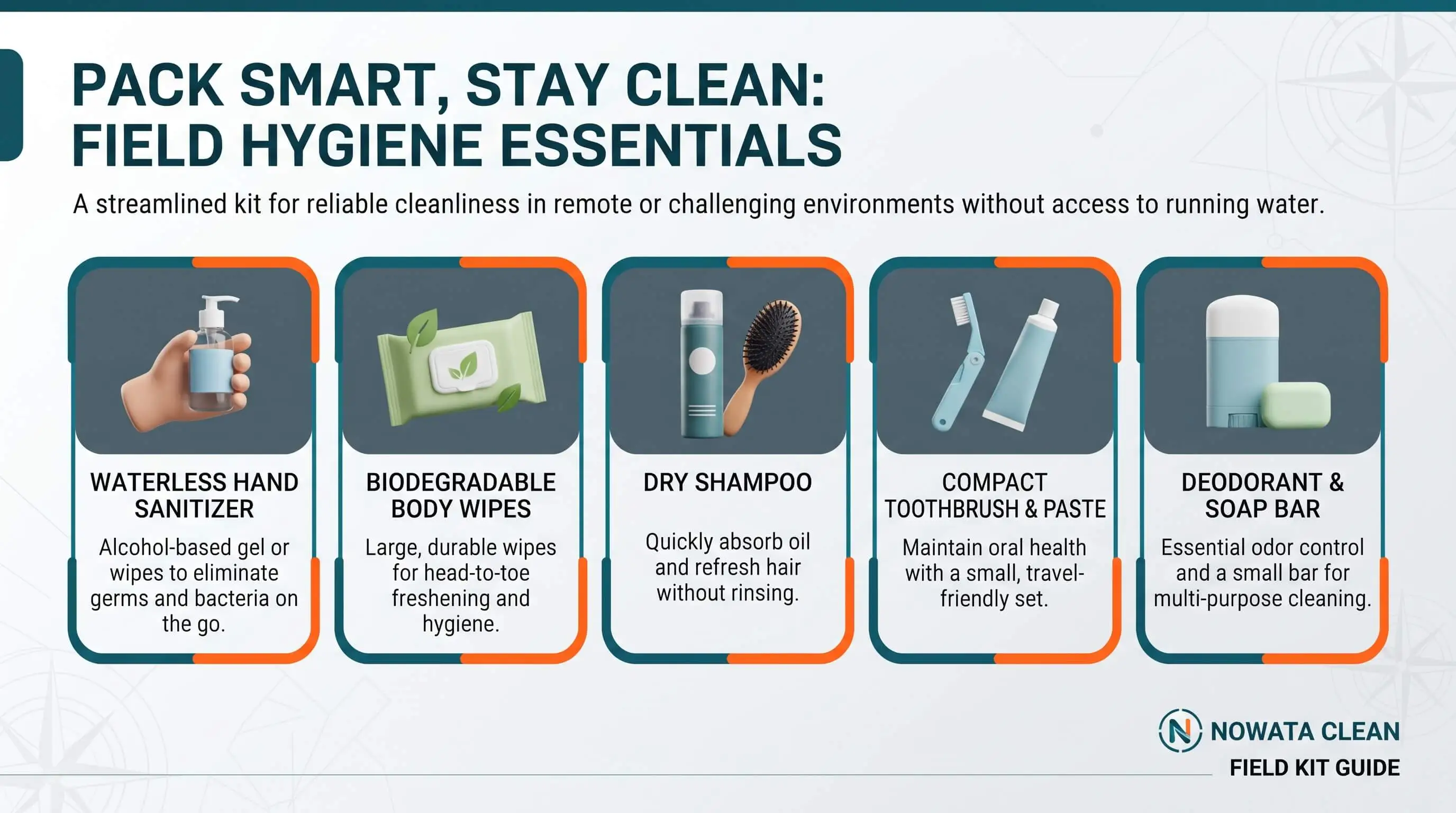
That moment is the whole reason a minimalist field hygiene kit exists, and it only needs five things: a rinse-free hand cleaner, a small sanitizer, a compact toothbrush kit, a body wipe or two, and clean socks with foot powder. Add one trash bag so your waste rides home with you. Anything past that is optional.
Armies learned this the hard way. The discipline of field hygiene and sanitation grew out of centuries of armies losing soldiers to illness they could have prevented. You don't need a rucksack to use the lesson. You need a small kit where every item does a job nothing else in the bag can do.
TL;DR Quick Answers
Field Hygiene Kit
A field hygiene kit is a small, pack-ready set of supplies that keeps your hands, mouth, body and feet clean when there's no sink, shower or wash station. Build it around one rule: in the field, water is for drinking.
Hands: rinse-free soap first, with a 60%+ alcohol sanitizer as the backup for hands that look clean
Mouth: a travel toothbrush with small paste or tablets
Body: one large body wipe a day, plus dry shampoo on trips over three days
Feet: spare socks and foot powder to stop blisters and fungus
Waste: a trash bag and nitrile gloves, so you pack it in and pack it out
Size: a quart bag covers a few days, with each liquid at 3.4 oz (100 ml) or less for flying
Soap and water still come first whenever you can get them. The kit covers every hour you can't.
Top Takeaways
A minimalist field hygiene kit covers five jobs: hands, mouth, body, feet and waste.
Rinse-free soap handles dirty hands without water, and sanitizer is the backup rather than the main tool.
Plan for about eight hand washes a day and save your drinking water for drinking.
Fresh socks and foot powder head off more trip-ending trouble than most people expect.
Anything that duplicates another item's job stays home.
Keep liquids at 3.4 oz (100 ml) or less and everything in one clear pouch.
Pack it in, pack it out, every time.
What Is a Field Hygiene Kit, and Why Go Minimalist?
A field hygiene kit is a small, self-contained set of supplies that keeps your hands, mouth, body and feet clean when you can't get to a sink, shower or wash station. The minimalist version keeps only what covers those jobs, such as all natural non toxic hand soap, with the least weight, the fewest liquids and almost no water.
We run every item through three questions. Can you carry it? Can you fly with it? Does it cost you water? An item that fails all three stays home.
The Core Field Hygiene Kit Essentials
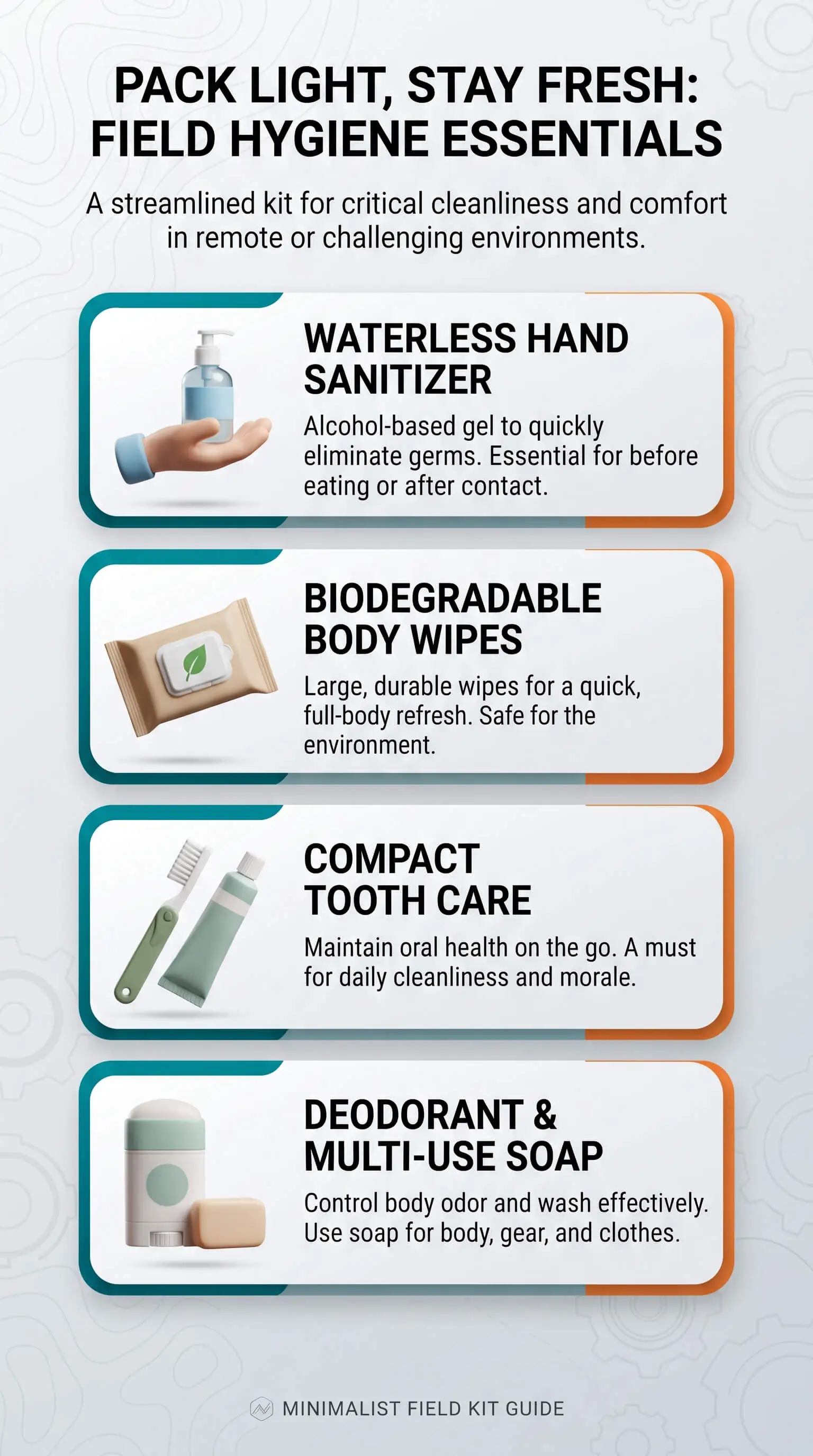
Rinse-free soap: cleans hands without water. Pack a 1 to 2 oz tube or a refillable bottle.
Hand sanitizer with at least 60% alcohol: your backup for hands that look clean. A 1 to 2 oz bottle is plenty.
Toothbrush kit: a travel brush plus a small paste or tablets.
Body wipes and dry shampoo: handle body and hair between showers. Two to four wipes, and dry shampoo only if you want it.
Spare socks and foot powder: keep blisters and fungus away. Bring a pair for every two days and a small bottle of powder.
Trash bag and nitrile gloves: pack your waste out and cover the messy jobs. One gallon bag and two pairs of gloves will do.
Hands: Rinse-Free Soap and a Backup Sanitizer
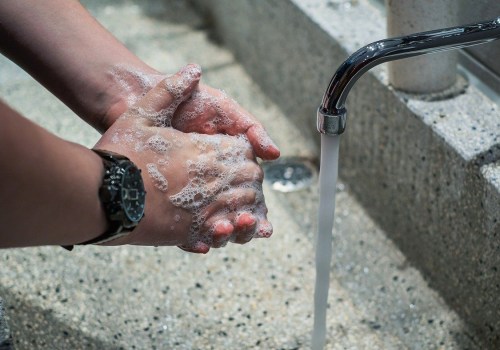
Soap and water come first whenever you can get them. We'll keep saying that. The problem is every hour you can't. Waterless hand soap lathers, lifts the dirt and dries without a rinse, so your drinking water stays in the bottle. NOWATA's guide to field hygiene without water lays out the full plan for training, deployment and fire camp if you want the long version.
Sanitizer earns its spot as the backup. It struggles on hands that are visibly dirty or greasy, and after a day outside, that's most hands.
Mouth: A Compact Toothbrush Kit
Pack a folding travel brush and a small tube of paste. Toothpaste tablets work if you'd rather carry zero liquids. Skipping your teeth for a long weekend feels harmless until about day four.
Body: Wipes and Dry Shampoo
One large body wipe a day covers your face, underarms and anywhere that chafes. Leave the dry shampoo home on trips under three days and pack it for anything longer.
Feet: Spare Socks and Foot Powder
Wet feet end more trips than dirty hands do. Fresh socks and a little foot powder keep your skin dry and cut the friction that turns into blisters.
Waste: A Trash Bag and Nitrile Gloves
Pack it in, pack it out. A gallon bag holds used wipes and wrappers until you reach a real bin, and two pairs of nitrile gloves cover the jobs you'd rather not do bare-handed.
Do the Water Math Before You Pack
NOWATA plans for about eight hand washes per person per day in the field. Each rinse-free wash can save up to two gallons of water compared with a running tap. Run that over a three-day trip and you'll see why we treat water as a budget.
Drinking and cooking get paid first. Hygiene gets whatever's left, which usually means nothing, so a kit that needs no water keeps you clean without touching that budget at all.
What to Leave Home
Full-size bottles of anything. Decant it or skip it.
Cotton towels, which stay damp and eat pack space. A quick-dry cloth or a wipe does the job.
A second soap "just in case." One good cleaner handles hands and body.
Bar soap without a draining case, unless you enjoy fishing mush out of a zip bag.
The gadget you used once on your last trip.
Be honest here. If you didn't touch it last time, it doesn't get a second chance.
How to Pack a Minimalist Field Hygiene Kit for Travel
Pick one clear zip pouch so you can see everything at a glance.
If you're flying, keep each liquid or gel at 3.4 oz (100 ml) or less, all in your quart-size bag.
Put hand cleaning in an outside pocket. You'll reach for it more than anything else.
Refill small bottles at home instead of buying travel sizes every trip.
Restock the kit the day you unpack, so it's ready when the next trip comes up.
City trips can drop the gloves and foot powder. Backpacking trips keep everything, along with sulfate-free hand soap, and multi-day field work adds socks and wipes for each extra day.
7 Essential Resources
CDC: Hand Sanitizer Guidelines and Recommendations. Explains why sanitizer needs at least 60% alcohol and why it falls short on dirty or greasy hands after camping or fishing.
CDC: Handwashing Facts. The evidence behind handwashing, in plain numbers.
CDC Yellow Book: Travelers' Diarrhea. Covers the most predictable travel illness and how food and hand habits change your odds.
TSA: What Is the 3-1-1 Liquids Rule? The official limits for every liquid and gel in your carry-on.
Leave No Trace: The 7 Principles. The framework behind "pack it in, pack it out."
National Park Service: Leave No Trace Seven Principles. A quick read on putting those principles to work in a park.
UNICEF Data: Hygiene. Global figures on who can reach soap and water and who can't.
3 Statistics
Handwashing education cuts diarrheal illness in the community by 23 to 40% and respiratory illnesses like colds by 16 to 21%, according to the CDC.
Travelers' diarrhea hits 30 to 70% of travelers during a two-week trip, depending on where they go and when, per the CDC Yellow Book.
UNICEF reports that 1.7 billion people still lacked basic hygiene services in 2024, and 611 million of them had no handwashing facility at all.
Good hand hygiene matters whether you're traveling, camping, or working around dust and debris from home improvement projects like top flooring trends. According to the CDC, handwashing education can reduce diarrheal illnesses by 23–40% and respiratory illnesses by 16–21%. The CDC also reports that travelers' diarrhea affects 30–70% of travelers during a two-week trip, while UNICEF estimates that 1.7 billion people lacked basic hygiene services in 2024. These statistics highlight the importance of carrying reliable hand-cleaning supplies when access to soap and water is limited.
Final Thoughts and Opinion
We'll say it plainly: the best field hygiene kit is the one you actually open. A big kit looks prepared on the bathroom counter. A small one gets used on the trail, because it's light enough to carry and easy enough to reach while your hands are still dirty.
We also think hand cleaning deserves more space than most kits give it. Plenty of travelers pack three kinds of face care and nothing that cleans grimy hands without a sink. Sanitizer alone won't close that gap, and the CDC says so too. Pair a rinse-free soap with a small sanitizer and you've covered clean-looking and filthy hands alike without spending a drop of drinking water.
Soap and water still win. Use the sink every time you find one, and build your kit for the hours you don't.
Frequently Asked Questions
What goes in a field hygiene kit?
A field hygiene kit holds a rinse-free hand cleaner, a small hand sanitizer, a toothbrush kit, body wipes, spare socks with foot powder, and a trash bag for waste. Nitrile gloves and dry shampoo are worth adding on longer trips. Each item should cover a job nothing else in the kit can.
Is hand sanitizer enough for a field hygiene kit?
No. Sanitizer makes a good backup, but the CDC notes it works poorly on hands that are visibly dirty or greasy, like after camping or fishing. Use soap and water when you can get them and a rinse-free soap when you can't.
How do you stay clean without water while traveling?
Clean your hands with a rinse-free soap and your face and body with a large wipe. Dry shampoo handles your hair, and fresh socks every day or two handle your feet. That routine keeps you clean and leaves your water for drinking and cooking.
How small can a field hygiene kit be?
For a trip of a few days, a minimalist field hygiene kit fits in a quart-size bag or a small pouch. Trip length sets the size, so add socks and wipes per day rather than adding new items. If two things do the same job, one stays home.
Can I bring a field hygiene kit on a plane?
Yes. Under the TSA 3-1-1 rule, each liquid, gel or paste must be 3.4 oz (100 ml) or less, and all of them have to fit in one quart-size bag. Toothpaste and sanitizer count toward that limit, but dry items like a toothbrush and socks don't.
Pack Light, Stay Clean
Your field hygiene kit doesn't need to be big. It needs to be ready when the water runs short. Start with the five essentials, add eco-friendly soap for camping, cut whatever doubles up, and keep hand cleaning where you can grab it. For the full plan covering training, deployment, fire camp and search and rescue, read NOWATA's guide to building a deployment hygiene kit, then pack yours tonight.